In early 2024, actor Alma Pöysti (born in 1981), shifted her attention from the silver screen to the audience – not to watch herself, though, but to observe the reactions of the viewers.
She was on an international promotional tour for her film, director Aki Kaurismäki’s Fallen Leaves, and noticed something quite special.
“No matter where we were in the world, people were amused and touched by the same things in the film,” Pöysti recalls. Her portrayal of Ansa, a working-class woman moving from job to job, earned her a Golden Globe nomination.
Now, fresh from rehearsal for an upcoming project, Alma Pöysti sits down to discuss how, exactly, one reaches that sense of cultural universality, and how that can bring us closer to each other.
1. Caring
“As long as we have compassion for one another, we will have hope.”
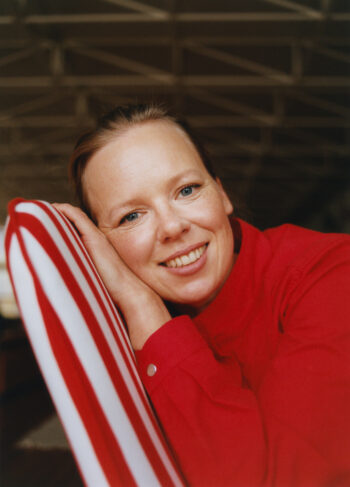
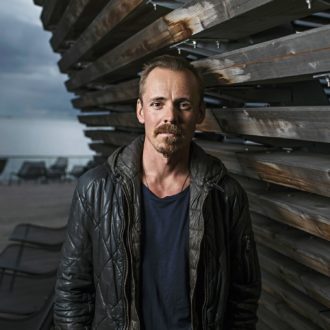
Alma Pöysti brings her distinct charm to every role, whether on stage or screen.Photo: Mikael Niemi
Before nominations, awards and foreign press, there were plays, domestic projects, and voice acting. Pöysti’s breakthrough performances have come relatively late in her career.
While promoting Fallen Leaves, Pöysti had a rare opportunity to witness how a film resonates with its audience. Despite being filled with inherently Finnish references – silent bars, pints and the needle drop of legendary Finnish rock band Hurriganes – the movie managed to touch audiences in the United States, Japan, Mexico and elsewhere.
“I think the movie’s magic lies in its humanity,” Pöysti says. “As long as we have compassion for one another, we will have hope.”
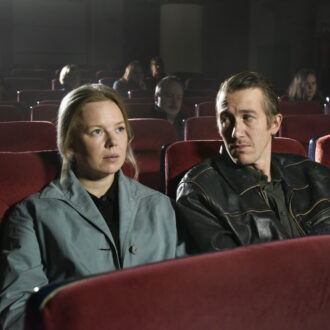
She is referring to not only the main romantic dynamic between her and Jussi Vatanen’s characters, but to all of the relationships in the film – and in life in general.
“Care isn’t just about romantic relationships. It also extends to dogs, friends, colleagues and nature. The world operates through connections.”
The dog she refers to, by the way, is her Fallen Leaves co-actor, coincidentally also called Alma. She’s a stray that Ansa rescues. Pöysti puts down her cappuccino and gushes.
“Such a wonderful colleague. Very, very talented. Has a great sense of humour and rhythm.”
In Fallen Leaves, the connections are built through gestures and blink-and-you-miss-it moments. Rescuing a dog. A shy smile, a subtle wink, a hand squeeze. Movies can drown the theme of love under a swelling soundtrack, overflowing dialogue and fireworks, but when you strip all that away, what remains is the core: caring.
Pöysti’s recent and upcoming film projects touch on relationships, caring and different phases and forms of love in one way or another. In Tove, she plays Finnish artist and writer Tove Jansson as she meets theatre director Vivica Bandler, one of her great loves. In Four Little Adults she stars as Juulia, who opens her marriage to explore polyamory, and in the upcoming thriller Orenda, she portrays a widow. The stories may be different and the themes unfamiliar, but the underlying experiences are widely shared.
“Everyone can recognise what loneliness is. And how difficult it is to fall in love or be shy, while still needing to be brave.”
Because if you’re not, nothing changes.
2. Exploration
“We should never rush to conclude that things are this way or that way.”
At young age Alma Pöysti decided she would read all the books in the world.Photo: Mikael Niemi
When Pöysti landed the role of Tove Jansson in director Zaida Bergroth’s acclaimed biopic, she knew it would be a challenge. Portraying a beloved figure with a well-documented life and career came with high expectations.
“I remember Zaida saying, ‘Listen, Alma. It’s clear that we can only fail at this. But let’s fail in an interesting way’,” Pöysti recalls.
With this, they not only granted themselves permission to fail but also a clean slate. It allowed them to explore the idea of Tove Jansson and present her in a new light. The approach worked. As a critic at Helsingin Sanomat, the largest daily in the Nordic countries, sums it up: When Jansson dances, the viewer can feel her shaking off the expectations and demands the outside world places upon her.
It’s clear that Pöysti is willing to challenge both herself and the creative process. She doesn’t want to view any situation or thought as fixed; instead, she approaches the artistic process as an ongoing exploration.
“We should never rush to conclude that things are this way or that way,” she says. “Exploration and curiosity are healthy things: without them, you risk getting stuck. That can be quite dangerous in life, culture, art or politics.”
One of Pöysti’s favourite methods of exploring new points of view is reading books. Ever since childhood, she’s been a voracious reader: first listening to her mother read to her out loud, later secretly reading in her room under the covers by flashlight.
“I decided at a young age that I would read all the books in the world. I was very excited about it for a while, until I realised I would never have enough time for it,” she says.
3. Listening
“Our ability to listen and communicate is our greatest chance for survival.”
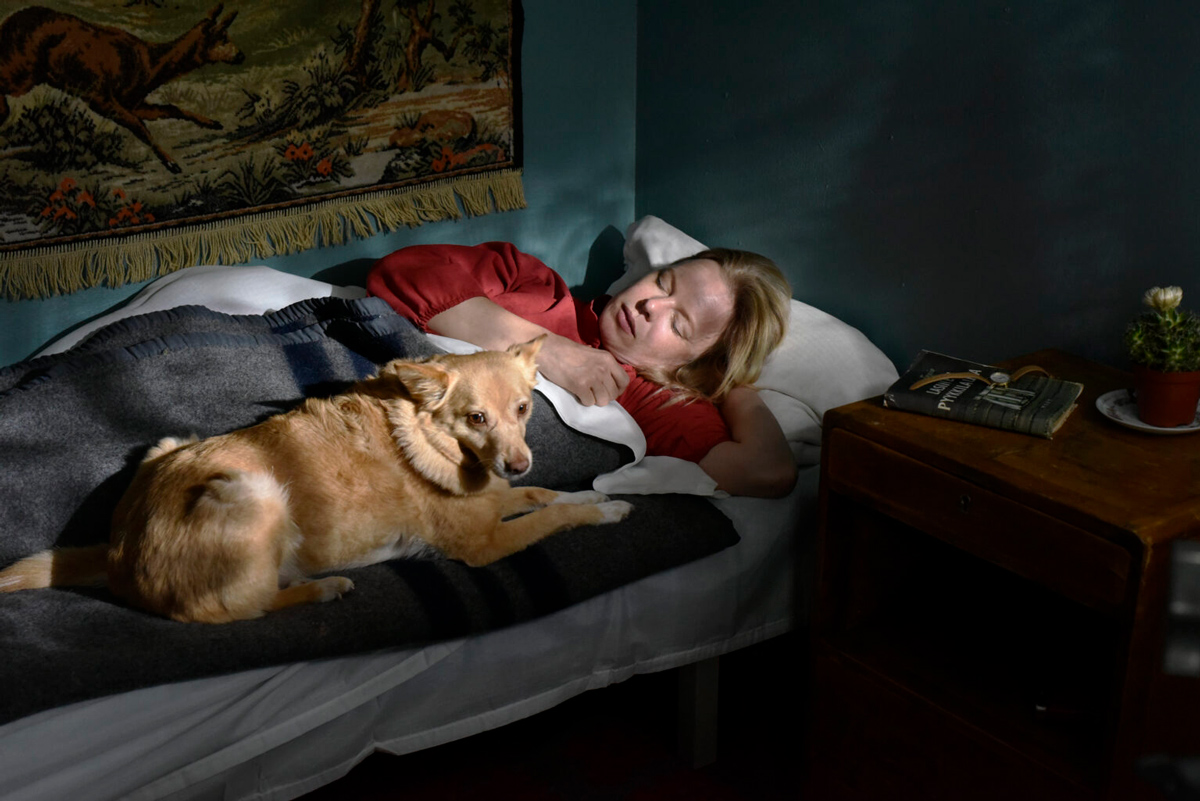
One of Alma Pöysti’s co-actors in Fallen Leaves was a dog whose name also happens to be Alma.Photo: Malla Hukkanen
Every spring, some of the most prominent literary figures in the world gather for the translation literature festival Helsinki Lit. For the past three years, Pöysti has hosted the festival. While Pulitzer and Nobel winners take the stage, it’s the audience and the fact that the tickets sell out as soon as they’re out that leaves Pöysti in awe.
“People listen to these discussions between authors and translators so intently,” she says.
“It brings me a lot of solace. Despite how it feels sometimes, we’re interested in other humans and other worlds.”
Creating art during a time of global turmoil, pandemic, economic hardships, war and the climate crisis has often left Pöysti feeling like her faith is being tested. Yet, it’s moments of connection that give her hope – like witnessing how the festival audience is ready to listen.
Or moments of appreciation from moviegoers for the way Fallen Leaves handles Russia’s attack on Ukraine: in several scenes, the characters listen to radio reports about the war. Viewers have appreciated that the war is addressed as part of the film’s narrative and Kaurismäki’s courage to do so, says Pöysti.
“We need to be able to talk about everything, the dramatic things, too. If we don’t, they fester, and we will never learn from our mistakes. Our ability to listen, remember, communicate and feel empathy is our greatest chance for survival.”
However, there is a certain beauty in quietness, too. Some journalists and viewers have grappled with the amount of silence in Fallen Leaves. The characters themselves are at ease with it, drinking colourful cocktails or listening to karaoke in comfortable silence. So is Pöysti.
“When there’s little dialogue, you get the opportunity to listen to the silence. That’s quite special.”
But when there is dialogue, it gives voice to the underdogs. Pöysti thinks this is something Tove Jansson and Aki Kaurismäki, both globally recognised Finnish artists, have in common; they defend the quiet people and their shyness.
“Through their works we get to hear the creatures and the people who don’t get their voices heard,” she says.
And then there’s the power of culture and art, which operates beyond words. Pöysti speaks fondly of how music can help unlock doors for which you may not yet have the keys. When she was younger, she played the clarinet, and still reads sheet music and scores. She narrates operas and fittingly plays an opera singer in Orenda.
“Music and dance allow you to reflect on something beyond logic and reason. Anything that’s not verbal or visual is crucial, as it nurtures the imagination; especially since we live in such a visually dominant world.”
4. Universality
“When you’re brave enough to dive deep within yourself your work becomes universal.”

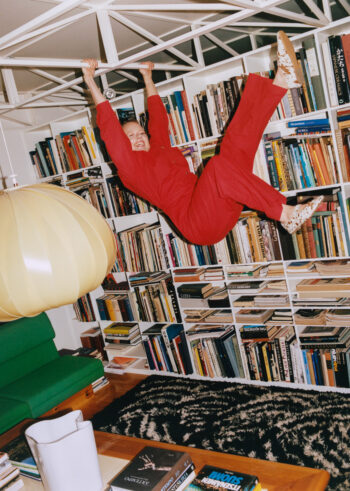
Alma Pöysti’s photoshoot took place in the stylish studio home of design icons Vuokko and Antti Nurmesniemi.Photo: Mikael Niemi
In screenings of Fallen Leaves, viewers laugh at the deadpan delivery of lines and the absurdity of watching a zombie apocalypse movie on a first date. These aren’t exactly knee-slappers, jokes that make you howl with laughter, but they’re subtle, and they’re realistic. Life is absurd.
This is Pöysti’s first Kaurismäki movie. While the director didn’t want his actors to prepare much for their roles, she re-watched all of his films in order to place her character and the story within a continuum of his works. Does Pöysti agree with Kaurismäki’s portrayal of Finland?
“Well, yes, we definitely have dive bars,” she says with a little laugh. But then she becomes more serious.
“We have these sorts of people and these silences. But we also have so much more: our humanity, our quirks, our vulnerabilities. And those are nothing to be ashamed of.”
Instead, culture manages to cross boundaries when it taps into this weirdness and vulnerability. You don’t need to speak a certain language or read subtitles in order to identify with a character who’s experiencing loss, falling in love or feeling ashamed.
“When you’re brave enough to dive deep within yourself, your work becomes universal,” Pöysti says.
If you try to please everyone and ensure that everyone understands and likes us, we can easily end up with generalisations that don’t amount to much.
“Here in Finland, people might look at Kaurismäki’s movies and not love the way he represents us. But I don’t think we understand how widely beloved he is. There are so many people who get him, who speak the same language.”
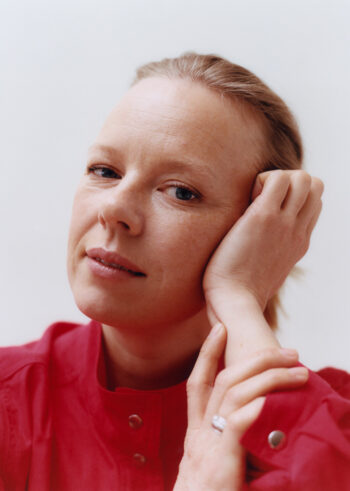
Alma Pöysti’s portrayal of complex characters shows a deep understanding of human emotions.Photo: Mikael Niemi
- Alma Pöysti (born in 1981) studied acting at the University of the Arts Helsinki, graduating in 2007.
- Pöysti belongs to Finland’s Swedish-speaking minority. She has worked mainly at Helsinki’s Swedish Theatre but also at the Finnish National Theatre and various theatres in Sweden.
- Pöysti has won two Jussi Awards, Finland’s premier film industry prizes.
- In 2023 Pöysti was nominated for the Golden Globe Award for Best Actress for her main role in the Aki Kaurismäki film Fallen Leaves.
- Passengers of Helsinki Regional Traffic trams and buses are very familiar with Pöysti’s voice, as she has been reading their stop announcements since 2015.
By Kristiina Ella Markkanen, ThisisFINLAND Magazine