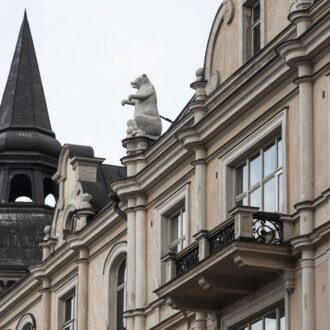
Forests and modern design are two of the things people identify with Finland. Less discussed are its historic wooden towns, where carpentry and creative design from an earlier era are on display.
Neristan, an area of Kokkola on the west coast of Finland, stands as one of the most complete examples.
Look closely and details emerge: decorative window surrounds, old “gossip mirrors” angled towards the street, and inner courtyards that conceal apple trees.
“Neristan” means “lower town” in Swedish, which is one of Finland’s official languages. (Kokkola itself also has a Swedish-language name, Karleby.) The area might resemble an open-air museum, but it’s also a living neighbourhood. Pastel-painted timber houses line a street grid first drawn in the 17th century, and many are still private homes.
A town built by the sea
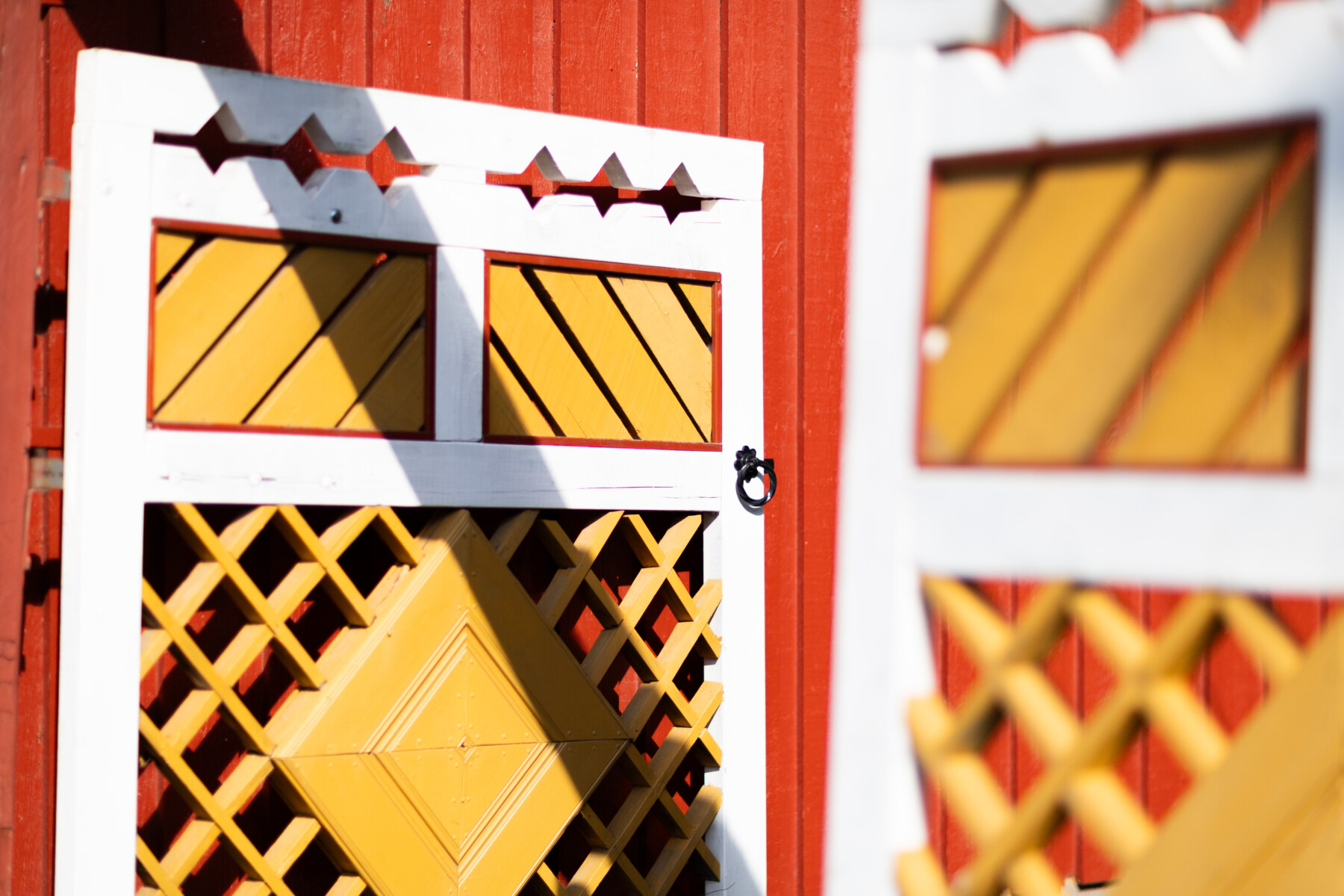
Working in timber called for precision and a practised hand.
Isokatu, one of the city’s main thoroughfares, can appear almost suspended in time. But the illusion quickly dissolves. A girl cycles past in a floral dress. A lawnmower kicks into life. An elderly man is walking his dog. Neristan is bustling with activity.
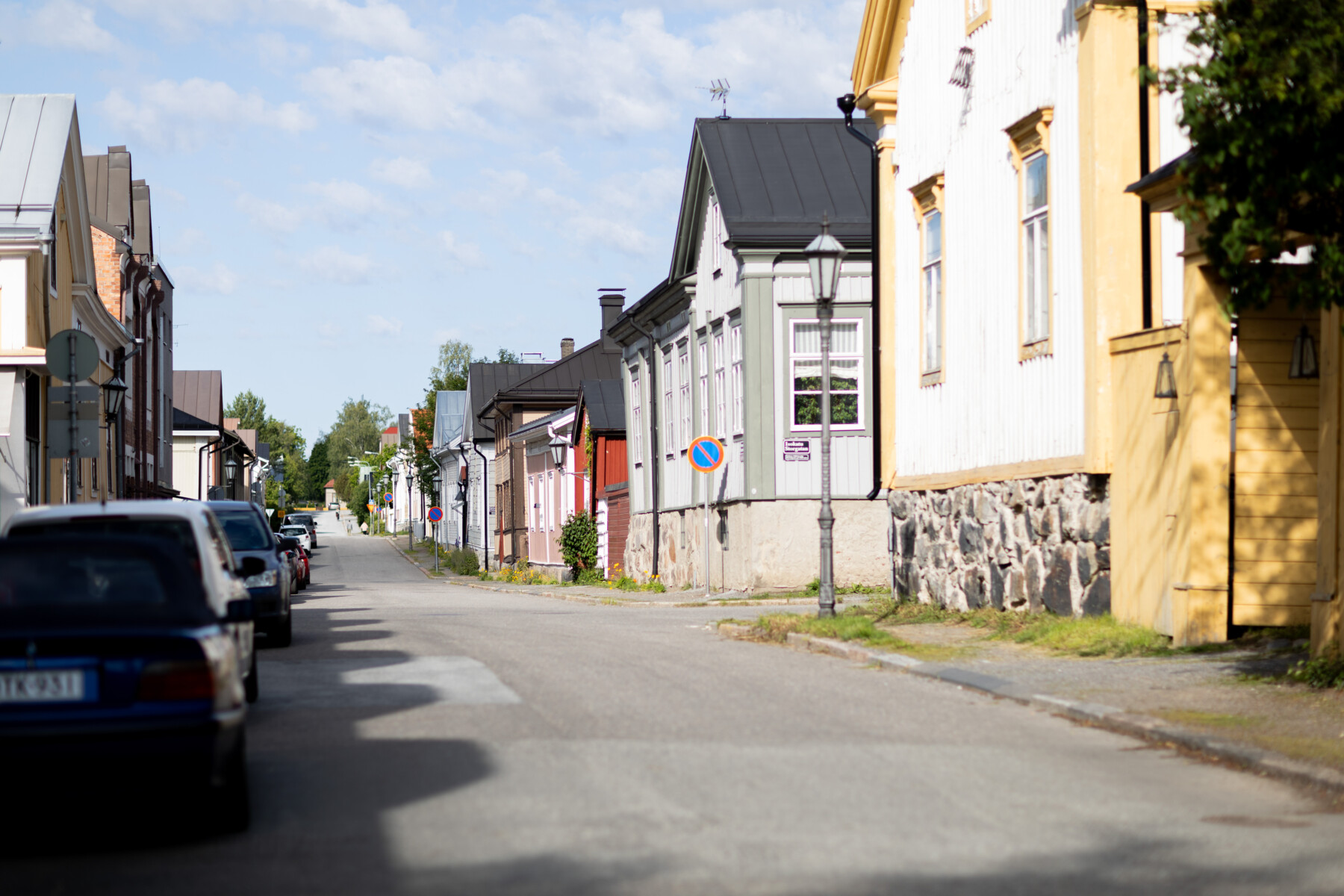
The wooden façades are clad in pastel-painted boarding.
When Kokkola was founded in 1620, it lived and breathed by the sea. The Sunti channel once stretched wide and deep enough for ocean-going sailing ships to dock close to the town. Neristan itself was planned along the waterfront; its town plan was formalised in 1665.
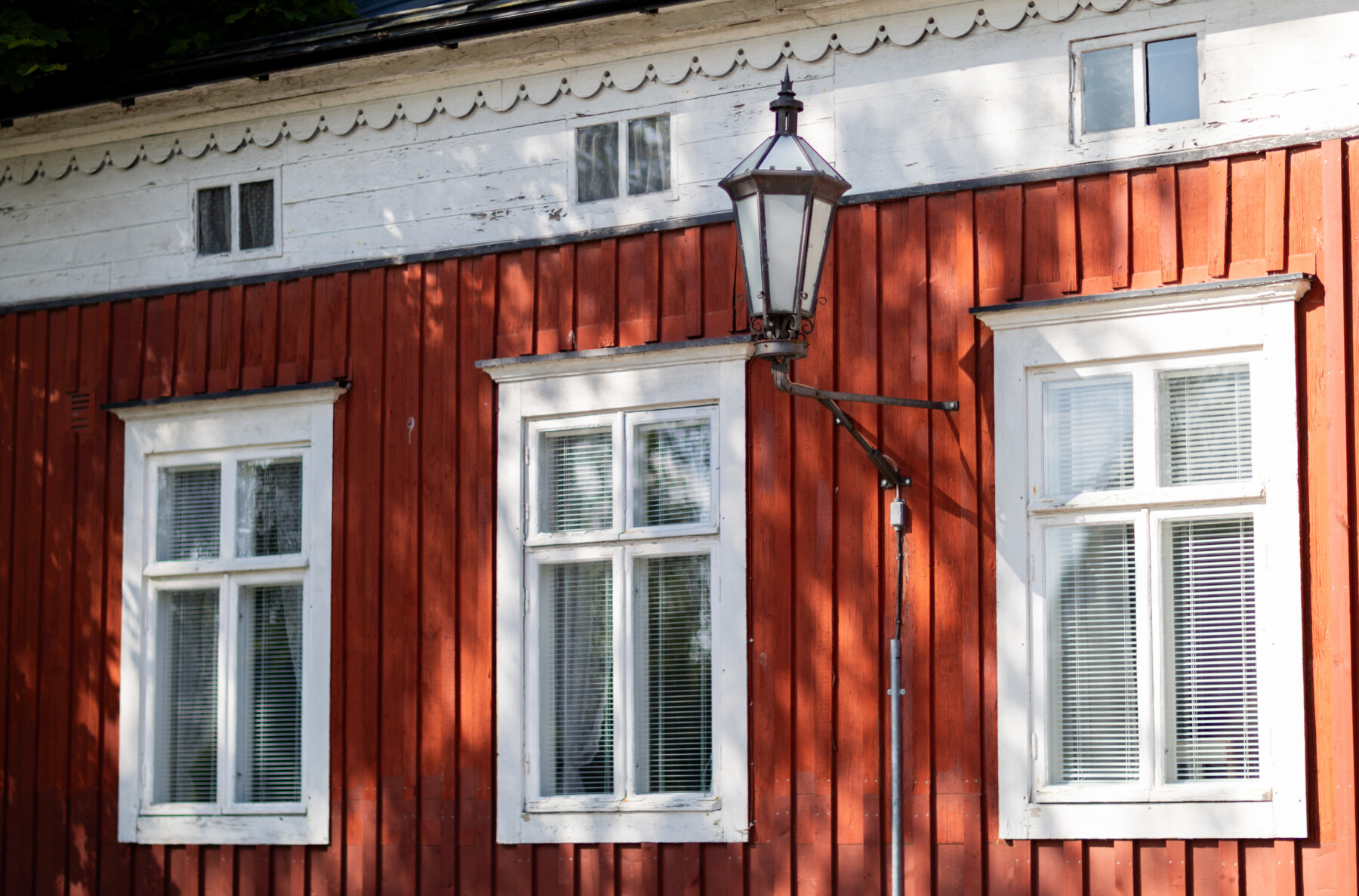
Fires, urban development and land uplift have repeatedly reshaped Kokkola.
Today the channel is a modest ribbon of water, narrowed by post-glacial land uplift, and the shoreline has retreated several kilometres from the centre.
Tar, trade and timber
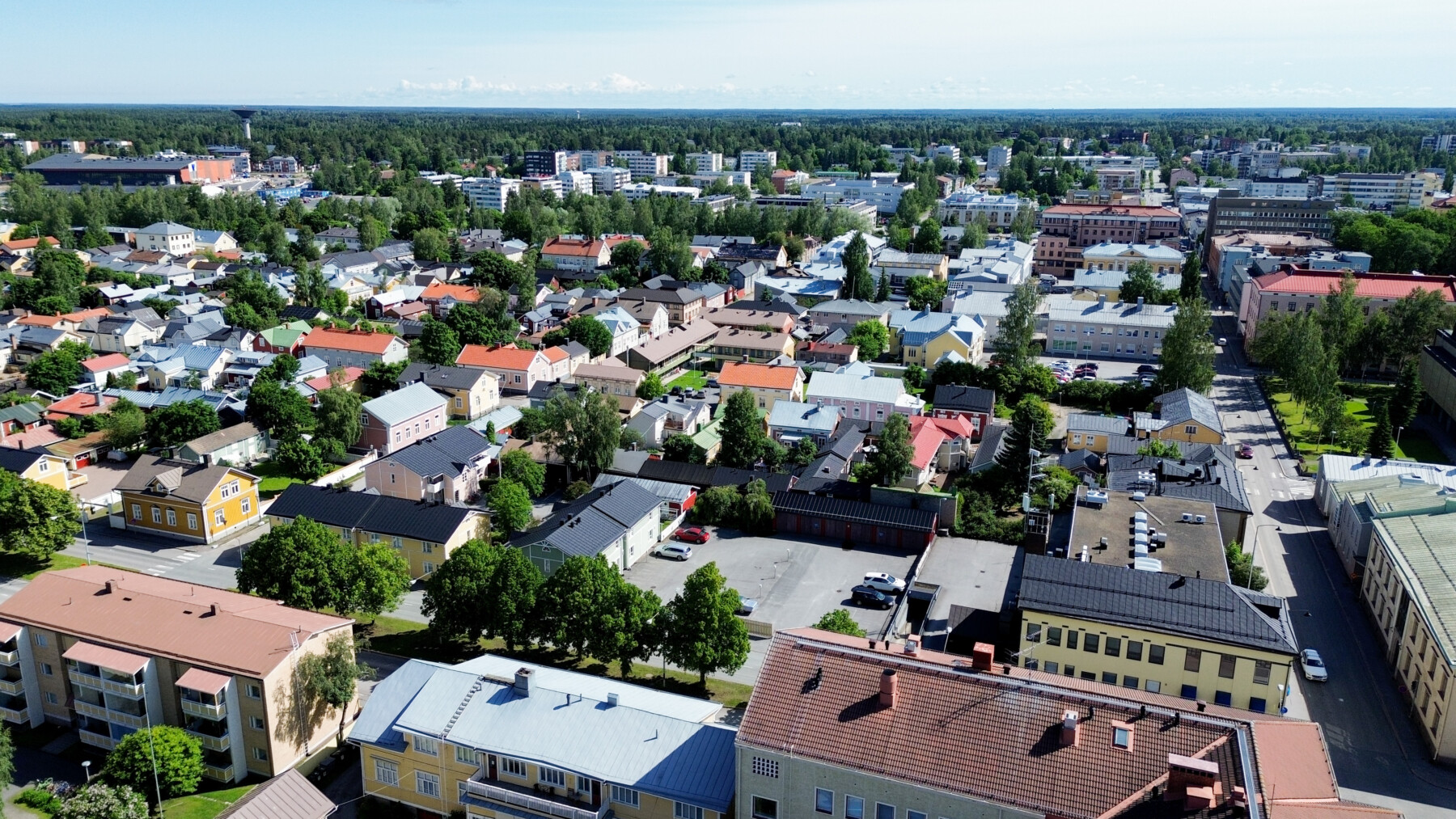
Kokkola was among the first Finnish towns to build two-storey wooden houses as population growth ran up against limited plot sizes.
The town’s prosperity was built largely on tar, the indispensable export of northern Europe’s shipbuilding age, alongside broader seafaring trade. In the 19th century, Kokkola ranked among Finland’s most significant maritime centres. Ships were constructed along the eastern shores of the Gulf of Bothnia, and many of the houses that still stand in Neristan date from this period.
These one- and two-storey wooden homes sheltered sailors, craftsmen, fishermen, shipbuilders and their families. In the 1830s, Kokkola had roughly 2,400 inhabitants, 300 of them sailors.
Life was industrious and often hard. The architecture is modest: painted boarding and symmetrical façades on well-tended plots.
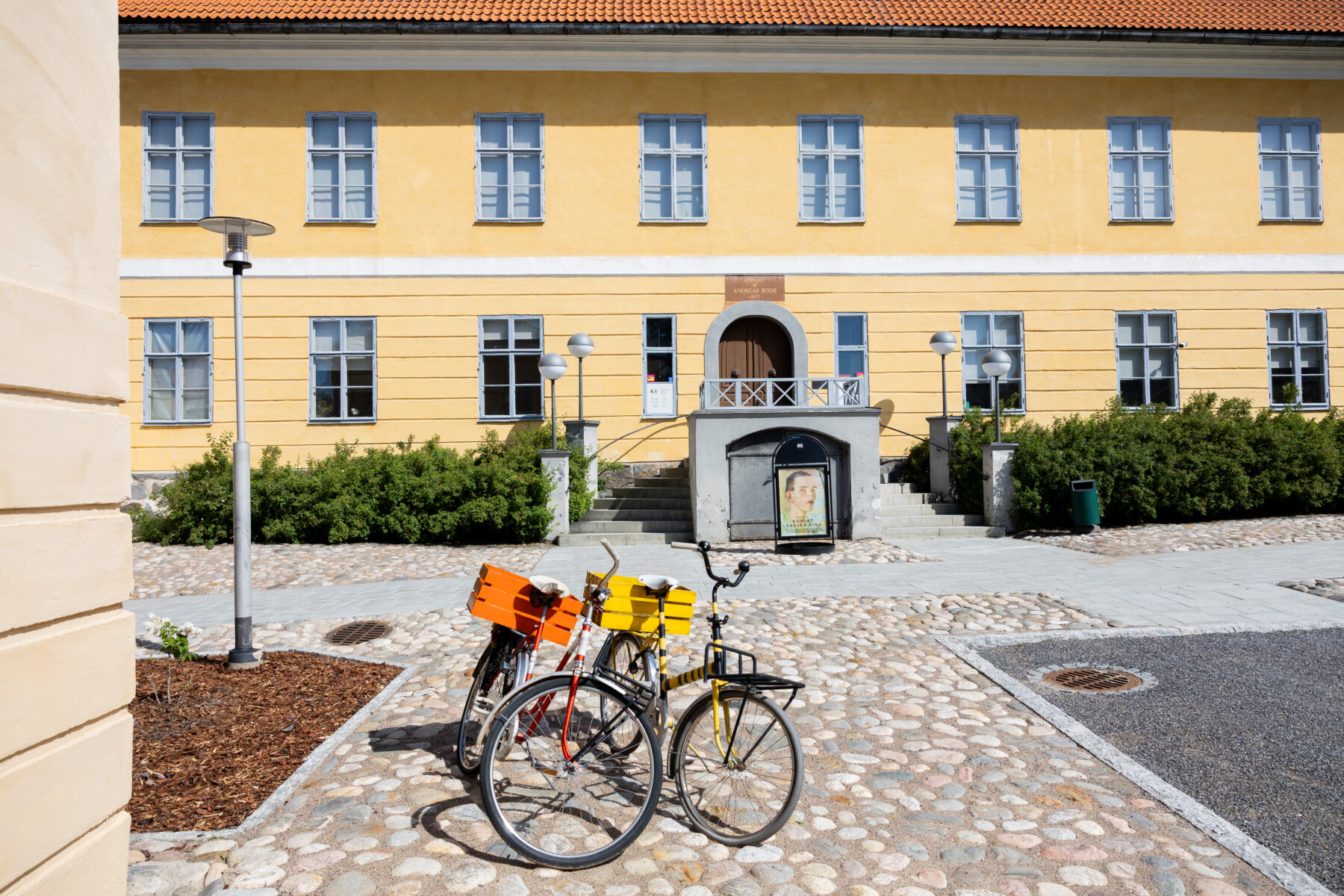
Anders Roos’s house was grand enough to host a visiting Russian emperor in the 19th century.
Across the way lies Oppistan – the “Upper Town” – where the wealthy once settled. Merchants and shipowners built grander residences here. Among them were Anders Donner and Anders Roos, who commissioned the city’s first stone houses in the early 19th century. Roos was reputedly one of the wealthiest men in Finland at the time. His residence now houses part of the K.H. Renlund Museum.
A note of continental ambition arrived in 1842 with the completion of the neoclassical town hall designed by Carl Ludvig Engel, the Prussian-born architect also responsible for Helsinki Cathedral. The building lent Kokkola a measured dose of metropolitan polish.
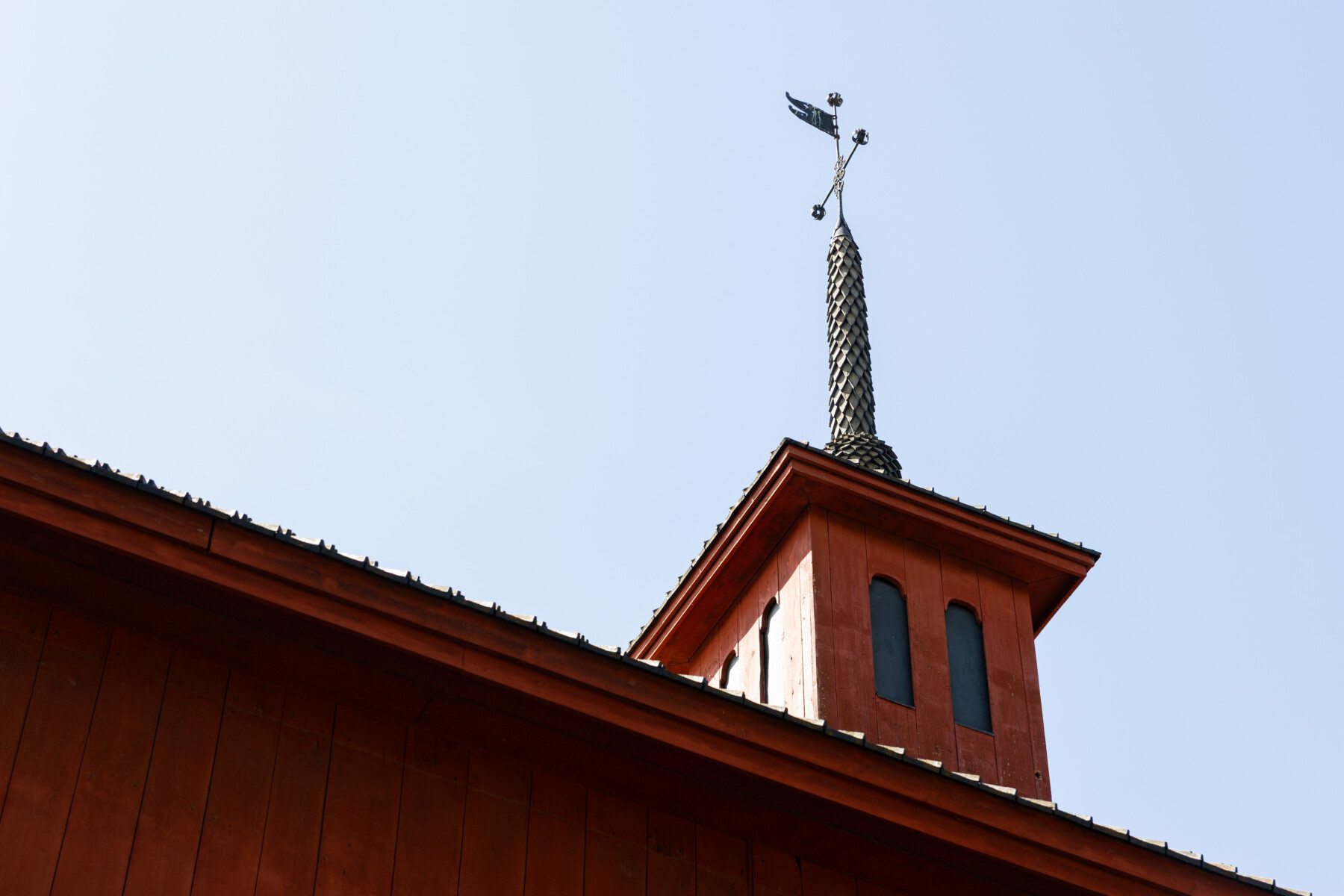
The Pedagogio schoolhouse was completed in 1696.
Nearby stands the Pedagogio, a small, red-painted former schoolhouse completed in 1696. It is the oldest surviving non-ecclesiastical wooden building in an urban setting in Finland.

Sweet and savoury waffles have become a summer staple in Kokkola.
Boys once studied Latin, writing and arithmetic there. Today, that block of the town is known as the Museum Quarter and hosts exhibitions, a natural history museum and, in summer, a waffle café whose scent drifts across the courtyard.
The art of watching
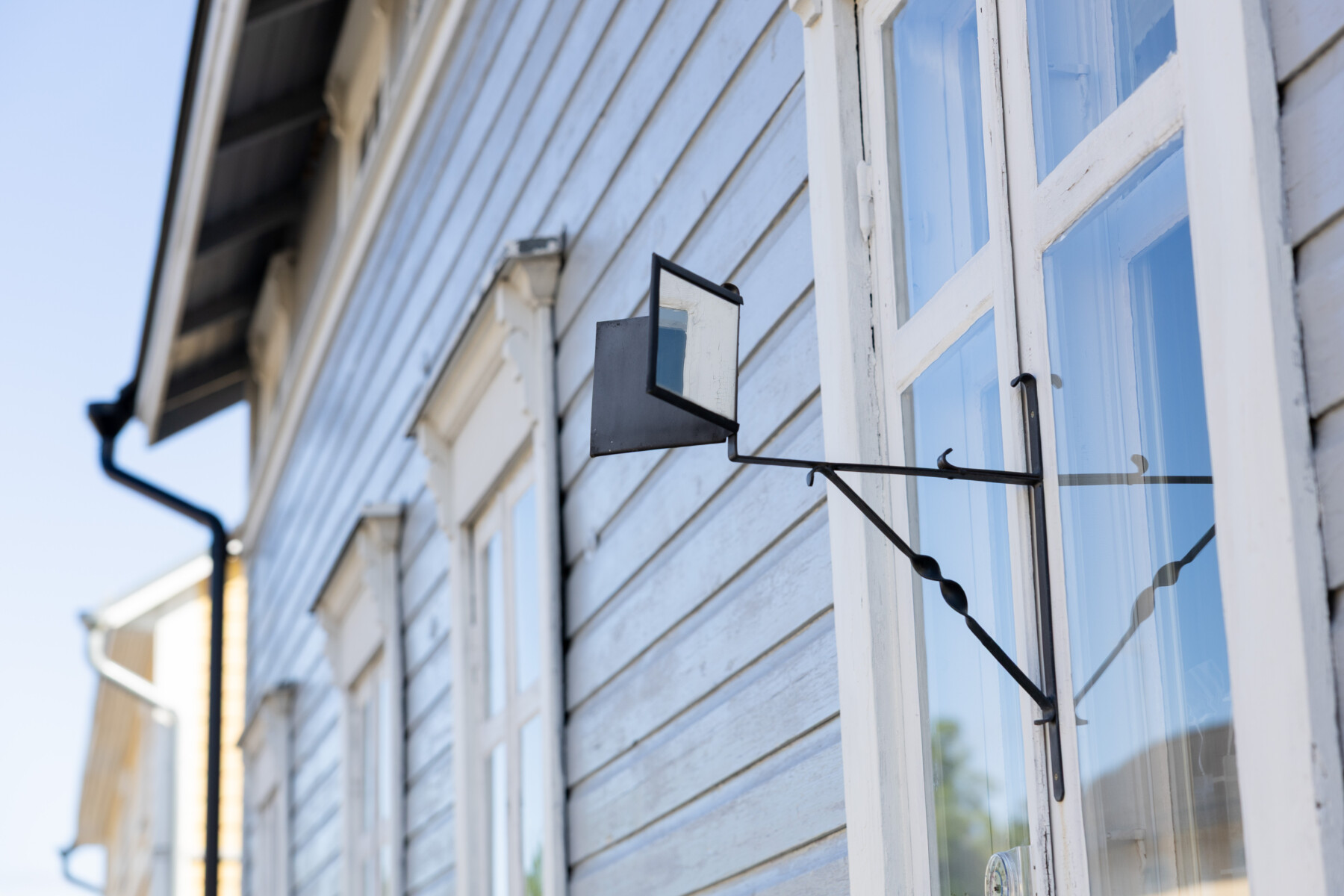
Gossip mirrors can still be spotted outside the windows of several houses in Neristan.
What are those small mirrors mounted beside the windows? They are “gossip mirrors.” In the 19th century, women sewing by the window could discreetly monitor the street’s comings and goings via a cleverly angled reflection. Who crossed the road? Which child was testing boundaries?
The mirrors remain. Now they reveal passing cyclists or, if you’re patient, the determined shuffle of a hedgehog at dusk.
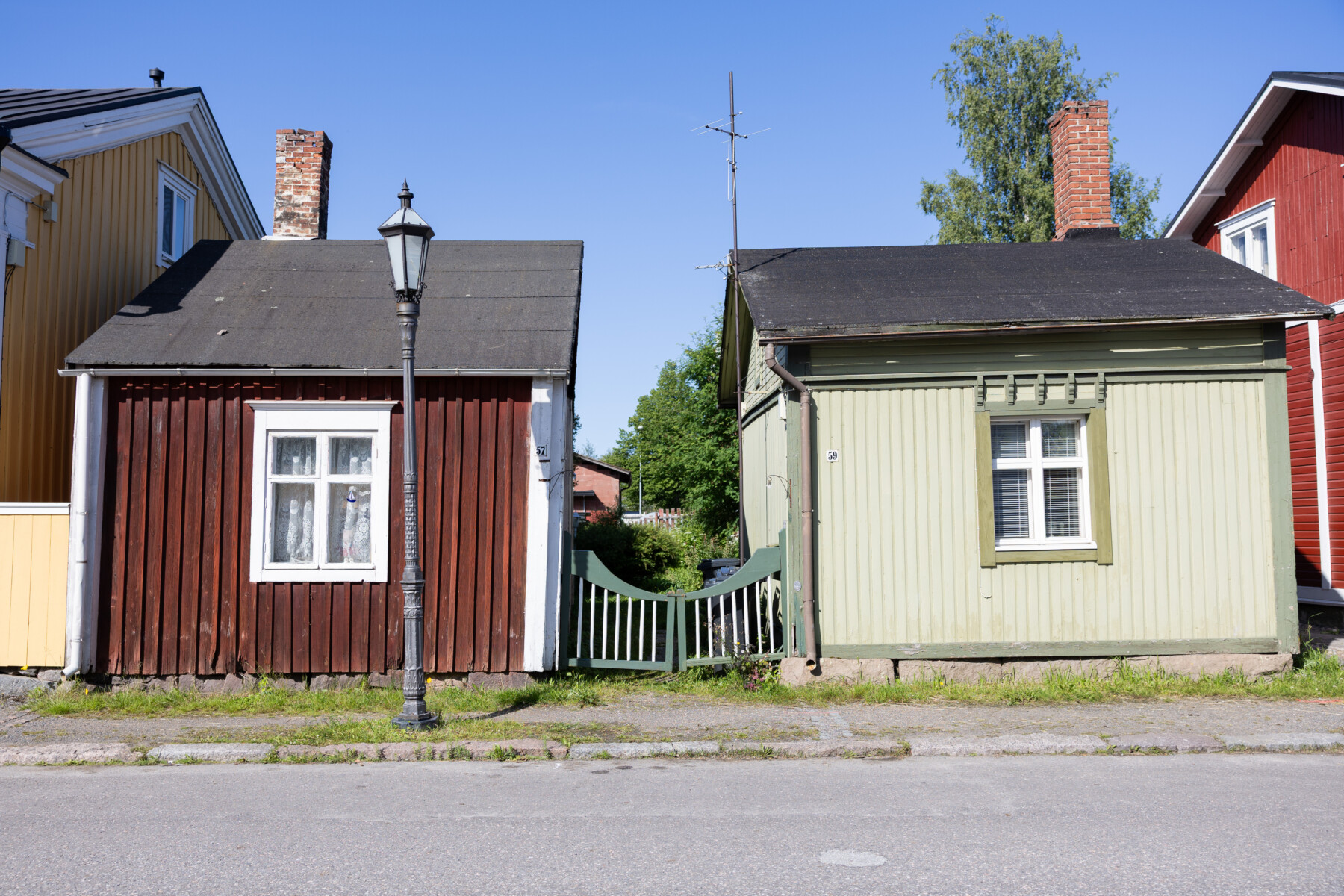
The district’s town plan dates back to the mid-17th century.
Most of Neristan’s historic wooden houses remain private homes, and they are much sought after. It was not always so. Particularly in the 1960s, modernisation threatened to erase large swaths of the district. Demolition loomed.
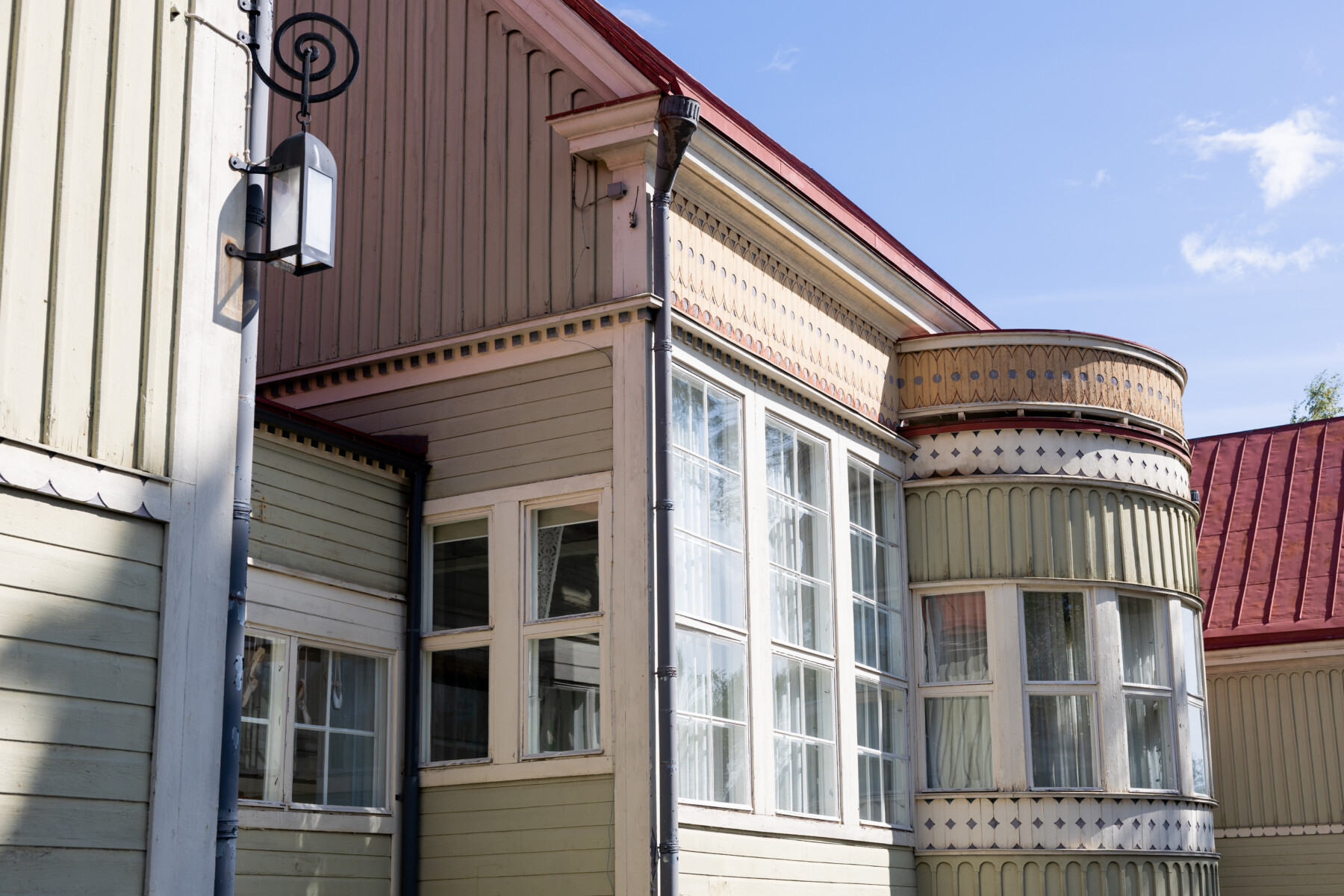
The wooden wing of the former Renlund School (1909) represents ornate Jugend-style timber architecture.
A change in attitudes allowed the area to survive intact. Today Neristan is safeguarded as a site of cultural and historical significance. Alongside residences, visitors will find boutiques, restaurants, guest accommodation and even a theatre at the district’s edge.
Did you know?
- The name Neristan is a Swedish-language term that translates to “Lower Town.” Oppistan means “Upper Town.”
- The district spans 12 blocks and hundreds of wooden houses, the oldest dating from the 18th century.
- Kokkola is bilingual; about 12 percent of residents speak Swedish as their first language. Swedish is one of Finland’s official languages.
- Fires have repeatedly reshaped the town over the centuries. Most of the surviving buildings date from the 19th century.
- Neristan is not alone. Comparable historic wooden districts can be found in Porvoo, Rauma, Loviisa, Pietarsaari and other towns.
Text and photos by Emilia Kangasluoma, May 2026