If you have ever walked barefoot along a beach at night, you will have noticed that the sand stays warm even after the sun goes down. A Finnish company is using the thermal properties of sand to create heat-storing batteries which could play a major part in meeting the world’s energy needs.
“My cofounder Markku Ylönen and I met at Tampere University of Technology,” says Tommi Eronen, CEO of Polar Night Energy.
“We were interested in energy technology, power plant engineering and energy storage. We knew the energy sector needed storage capacity because of the growth in renewable energy production.”
The problem with solar photovoltaics and wind power is that they generate power when the conditions are right, not when people need the energy. The solution is storing this energy somehow, such as in lithium-ion batteries, but these can be expensive and have a short storage duration.
“A battery might only be able to store energy for a few hours, but we need to store energy for days,” Eronen says. “Our solution is to store this energy as heat in solid materials.”
Storing renewable energy

CEO Tommi Eronen (left) and CTO Markku Ylönen started working on their thermal battery when they were studying at Tampere University of Technology.Photo: Polar Night Energy
Founded in 2018, Polar Night Energy has developed sand batteries, attracting attention from around the world. They were featured on the BBC and were named one of TIME magazine’s best inventions of 2025.
Although heating sand seems simple, the company’s real advantage is their patented systems to charge and discharge the heat, transferring that energy with minimal loss.
Heat can be generated from renewable energy sources like wind and solar power. In Pornainen, the Sand Battery is charged with wind energy.
The heat is stored in giant silos of sand until needed for district heating or industrial processes.
“There are many industrial companies which need hot air or steam to deliver thermal energy, such as in the food and beverage, lumber, chemical, pharmaceutical and textile sectors,” Eronen says. “In the past they had to use fossil fuels like oil and gas, but now they have a new choice.”
Major sustainability benefits
The improved sustainability of sand batteries is one of its biggest selling points, and Eronen admits lowering CO2 emissions is one of his main goals.
“We saved 600 tonnes of CO2 emissions in one year at Loviisan Lämpö’s plant in Pornainen, compared to combustion-based systems,” he says. “I see cutting emissions to meet the world’s climate goals as a personal challenge.”
Circular solution with waste soapstone
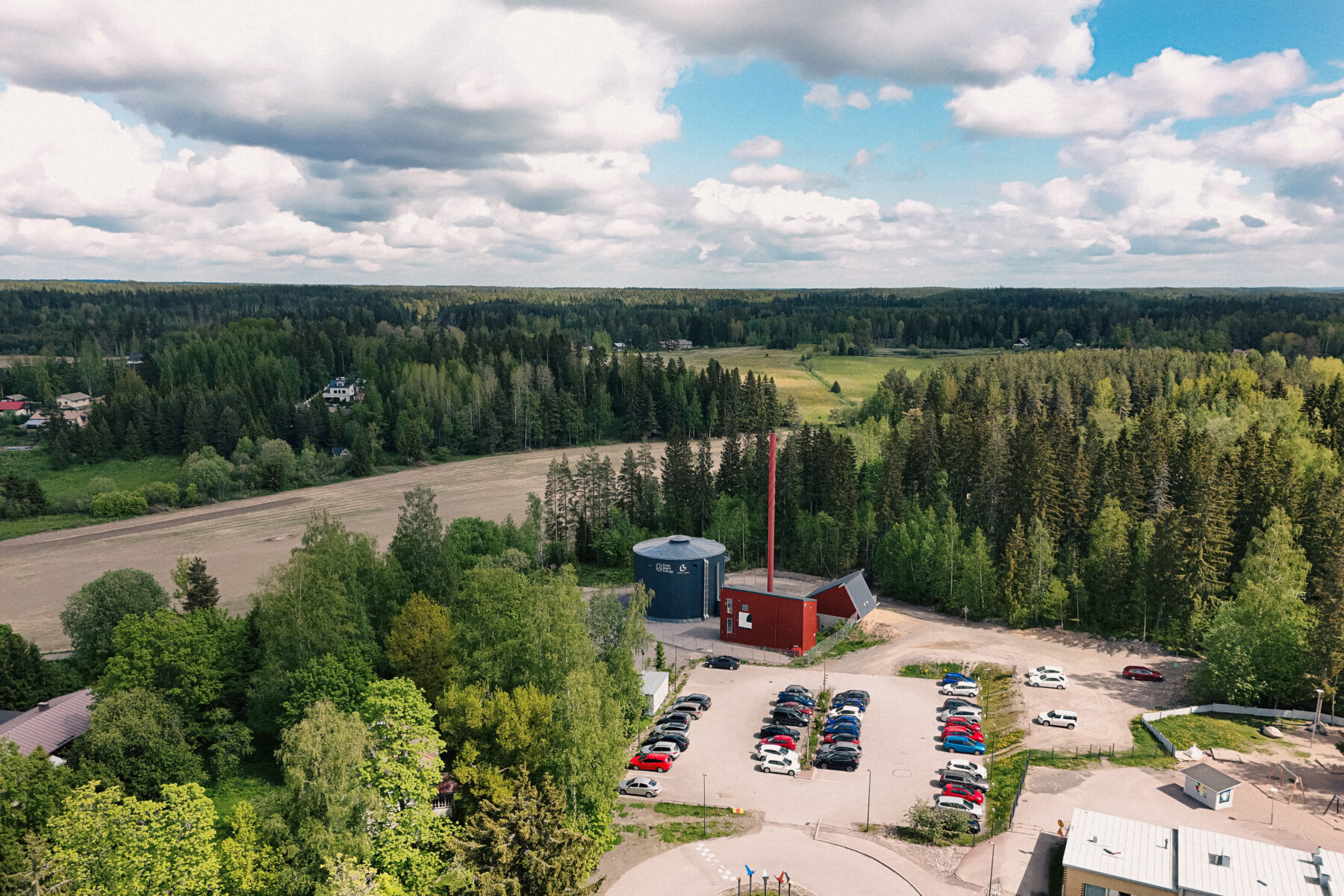
The company’s sand batteries heat homes and businesses through Finland’s district heating networks.Photo: Polar Night Energy
Polar Night Energy has two commercial sand batteries in operation, one in Kankaanpää, near the Finnish west coast, and Pornainen, which is in southern Finland. The Kankaanpää sand battery was opened in 2022 and can store 8 MWh, which is used in the region’s district heating network.
The Pornainen sand battery began operations in 2025 and is much larger – 100 MWh – and delivers hot water for the local district heating network. In general, the sand battery can deliver hot water, steam or air, with current output temperatures of up to 400 degrees C (752 F). The 2,000-tonne silo is about 15 metres wide and 13 metres tall (50 x 43 feet). It uses sophisticated software that controls when heat is produced and released to minimise costs. It also shares heat with the district heating network, replacing a plant that burned woodchips.
“In Pornainen we use crushed soapstone to store heat, a byproduct from the company Tulikivi’s fireplace manufacturing,” Eronen says. “This proves we can use sand-like materials and not expensive river sand. There is a global shortage of river sand, which is used in construction.”
Is generating electricity next?
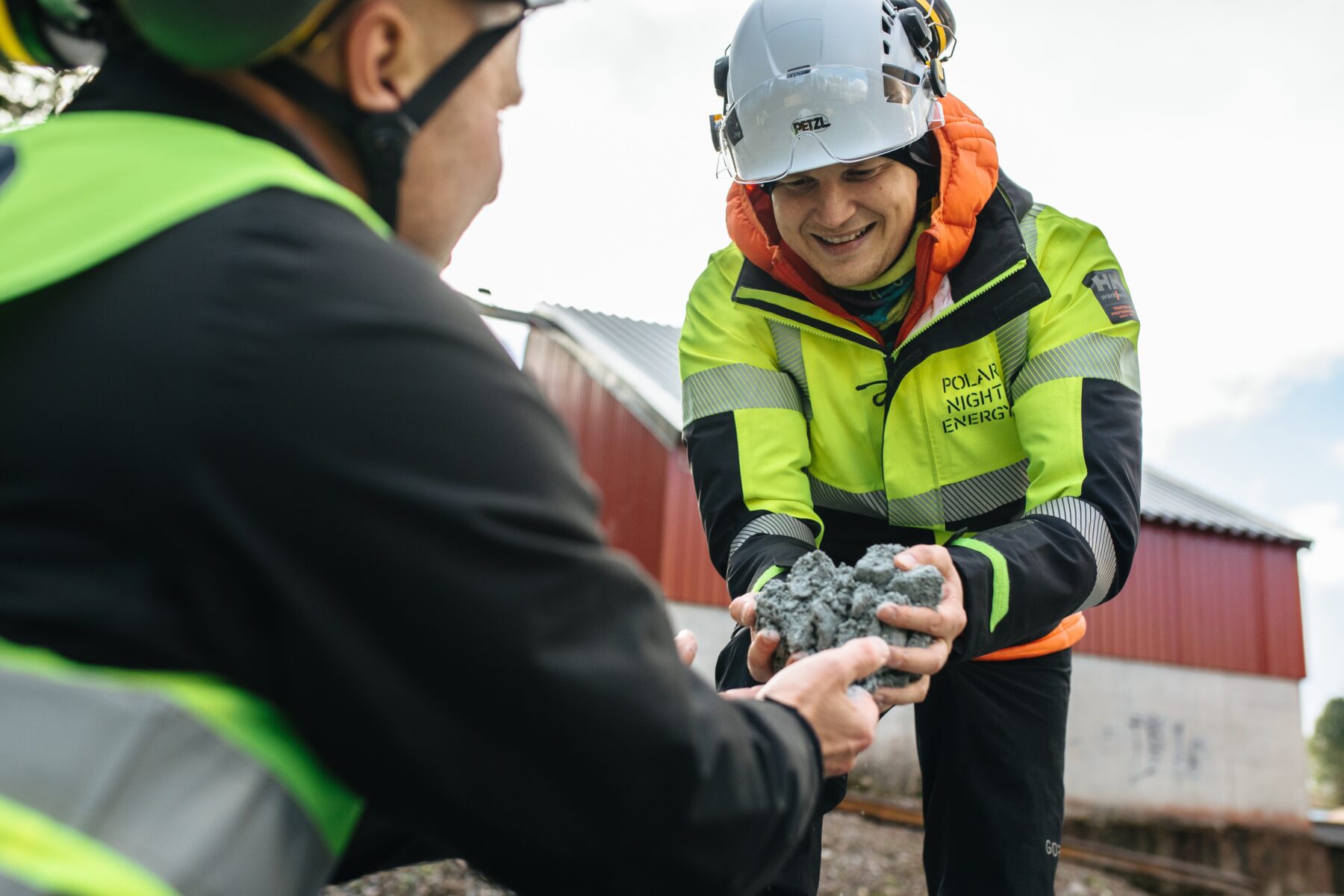
Although it is called a sand battery, the company’s solution can use other materials such as soapstone waste.Photo: Polar Night Energy
The 26-member team at Polar Night Energy is also working on a solution to turn stored heat back into electricity. When this is working correctly, sand batteries could be used not just to warm homes and help factories but even to power lights and charge electric vehicles. To expand, they are busy looking for partnerships with big global companies.
“We are excited about the future and are glad of all the attention we have received,” says Eronen. “We want to work fast and have a positive impact on the world.”
By David J. Cord, February 2026