Laughter echoes through the space – or rather, delighted cackling. Hugo, 11 months old, has discovered a trampoline and is testing it enthusiastically with his mother, Viivi Jokinen. Walking is still uncertain, but crawling offers a swift escape.
“This is our first time here with Hugo,” Jokinen says. “And I think he approves.”
Around them are slides, ball pits and soft-edged contraptions in bright colours. Artificial greenery climbs the walls. The atmosphere is light, calm and welcoming.
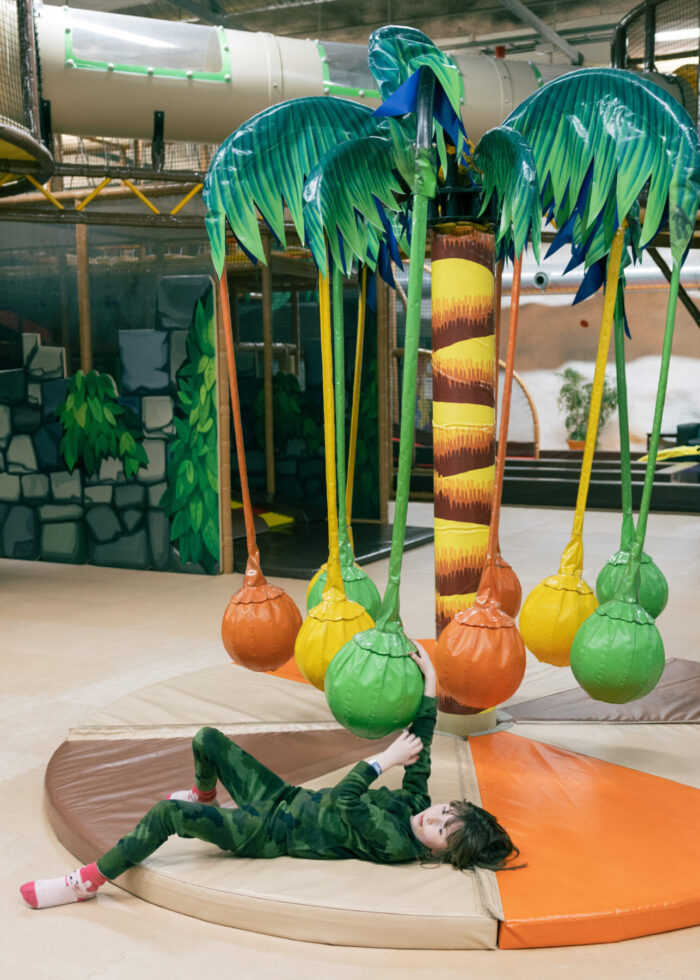
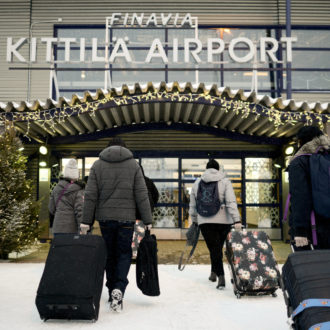
Ivy-Rose Clark, 7, was visiting the Play Cave with her parents and brother. The British family was travelling to the northern Finnish city of Rovaniemi to meet Father Christmas the same day.
It is easy to forget that we are not just indoors, but some 30 metres (100 feet) underground, inside an indoor playground known as the Play Cave, beneath Helsinki’s Hakaniemi district.
This is Helsinki’s surprise: the city continues below the surface.
A city beneath the city
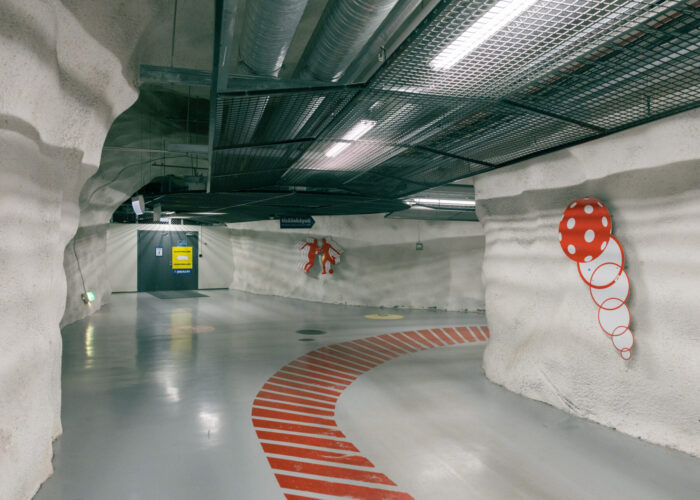
Finland’s granite-rich bedrock makes extensive underground construction possible. It could be said that preparedness is in the DNA of the Finns. Construction of shelters has continued from 1955 onwards.
Helsinki is thought to be the only city in the world with an underground master plan. Beneath its streets lie playgrounds, gyms and sports halls; running tracks, metro stations, art spaces and band rehearsal rooms; car parks, swimming pools, a museum and even a church. There are tunnels, retail spaces and, in some cases, artificial lakes.
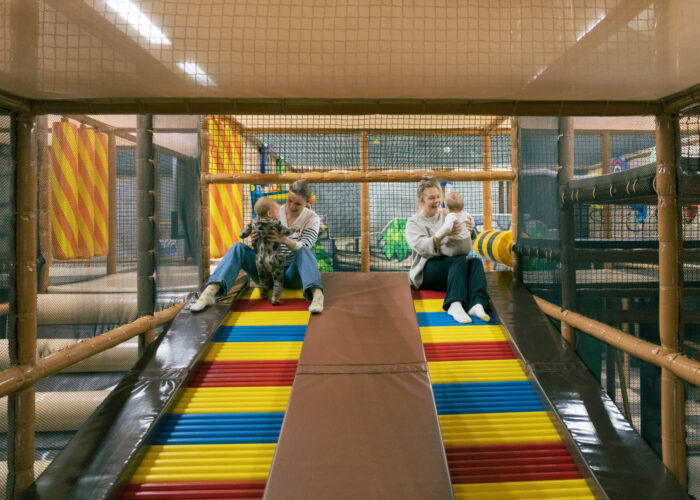
Anna Arvola with Anton, eight and half months, and Senni Niemi with Verne, also eight and half months, visit the Play Cave regularly. “Everything here is soft, so it’s safe for children to practise their motor skills,” Arvola says.
What is striking is how little this underground city resembles a bunker. Spaces are high, materials exposed and lighting carefully considered. Helsinki’s granite bedrock allows rooms to be carved wide, and the result feels deliberate rather than defensive.
Much of this subterranean world began life as civil defence infrastructure. Helsinki alone has around 5,500 shelters, with space for close to one million people which is a remarkable figure in a city of roughly 700,000 residents.
Back in the Play Cave, Hugo makes a determined crawl towards the slides. His mother follows, smiling.
Preparedness as a way of life
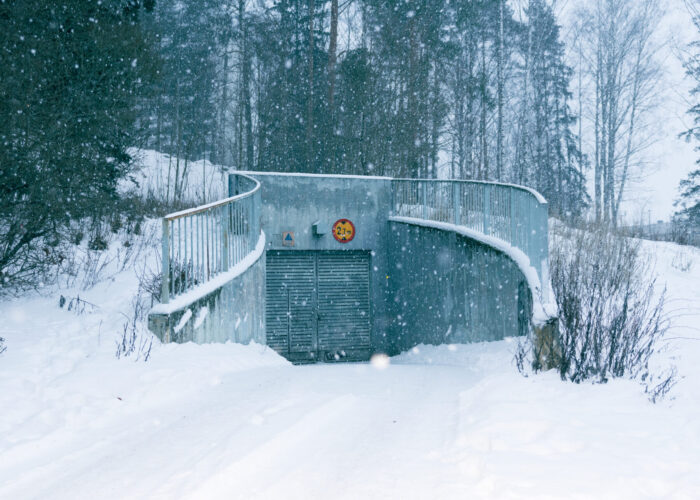
Helsinki has approximately ten million cubic metres of underground space, comprising nearly 500 individual subterranean facilities.
Few people know Helsinki’s underground as well as Pasi Raatikainen, a senior civil defence planner with the Helsinki City Rescue Department. He speaks about the shelters with pride.
“Finland is a model country for civil defence,” he says.
The origins of the system lie in the Second World War and its aftermath. As Finland set out to rebuild an equal and just society, preparedness became part of the social contract. Shelters were planned on a scale that would allow space for everyone, including the most vulnerable, Raatikainen explains.
Over time, the threats shaping preparedness have changed. During the Cold War, nuclear war loomed large. After the Chernobyl disaster in 1986, attention turned to nuclear accidents. The infrastructure evolved accordingly, without ever disappearing from everyday life.
Daily life, eight floors below
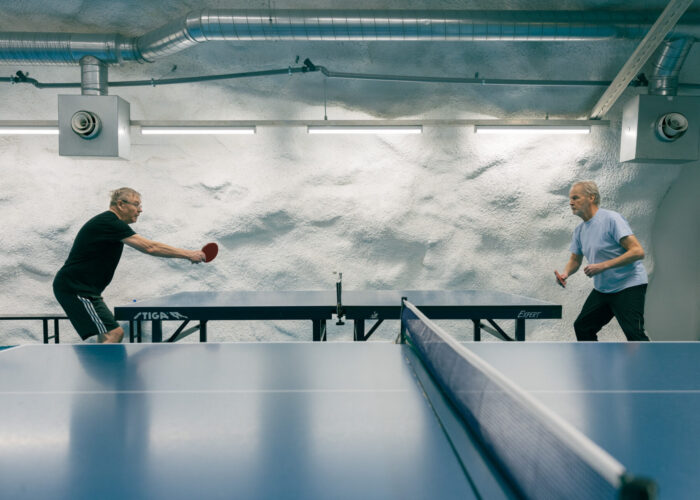
Timo Kauppila, left, and Veli Perikangas started playing table tennis at Maunula Sports Hall a few years ago, following a major renovation. “It’s been refurbished beautifully,” Kauppila says.
The sharp crack of a ping-pong ball cuts through the air at Maunula Sports Hall. Retirees Veli Perikangas and Timo Kauppila practise table tennis several times a week. On some days, they lift weights or stretch.
“So we don’t completely stiffen up,” Perikangas says, smiling.
The hall sits deep underground, roughly eight storeys below ground level, by Kauppila’s estimate. Rock music plays as barbells plates rise and fall. On a weekday morning, the space is shared by retirees and younger adults.
Professional dancer Lara Müller comes here twice a week. What she values most are the conditions.
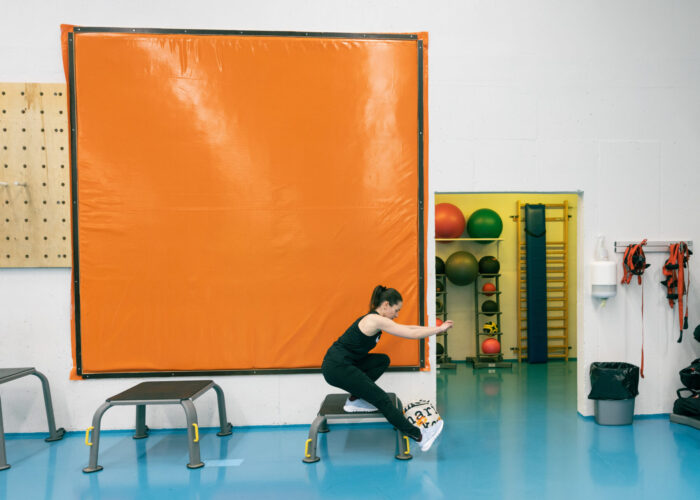
Originally from Switzerland, Lara Müller notes that civil defence shelters there are largely hidden from view. “You can’t simply walk into them like this,” she says.
“It’s bright and pleasant,” she says.
The ceiling is high, and the air fresh.
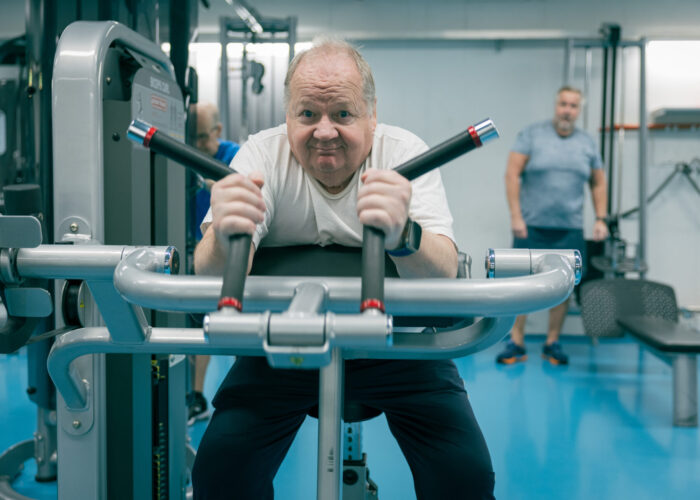
Retiree Reijo Lohtaja has gotten to know fellow gym-goers at the fitness centre. He likes to keep active, and works out there three times a week.
“I have a good feeling that there’s enough air,” says Reijo Lohtaja. He trains here three times a week with friends, chatting about current affairs between sets. Occasionally, they reflect on the fact that they are exercising inside a civil defence shelter.
“It’s good these spaces aren’t left empty,” Lohtaja says.
Why Finland is different
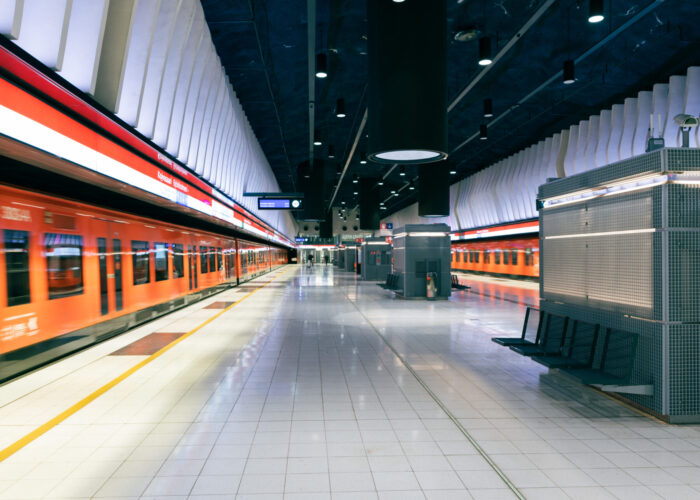
Helsinki’s metro network may be simple, but it works. Several of Helsinki’s metro stations double as civil defence shelters. Shown here is Koivusaari metro station, opened in 2017.
Finland’s approach to civil defence stands out internationally in three key ways. First, the commitment has been long-term: shelters have been built and maintained for decades. Second, unlike in many other cities, the system is unusually transparent. There are more than 50,000 shelters nationwide, and most Finns know where their nearest one is located.
Third – and perhaps most strikingly – many shelters are in active daily use. Underground spaces house playgrounds, gyms, car parks and swimming pools. In apartment buildings, shelters often double as storage rooms.
“It would be foolish not to use this capacity,” Pasi Raatikainen from the Helsinki City Rescue Department says.
Active use keeps the spaces in good condition and familiar to residents. If an emergency were ever to arise, people would not be entering an unknown place.
“There’s a sense of security in knowing this is somewhere your child has played,” Raatikainen says.
Sporting through the rock
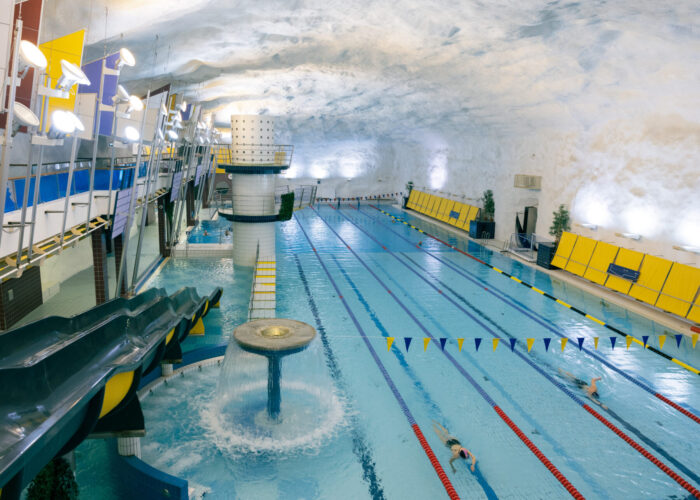
Opened in 1993, the Itäkeskus Swimming Hall and multi-purpose complex welcomes around 375,000 visitors annually. In addition to pools and saunas, it houses gyms and sports halls.
Outside, wet snow falls heavily. Inside, the air is warm and humid. Pools shimmer under artificial light.
The Itäkeskus Swimming Hall is opening for the day. Swimming is one of Finland’s most popular pastimes: lakes and beaches in summer, indoor pools in winter.
Above the hall lies some 50 metres of solid rock.
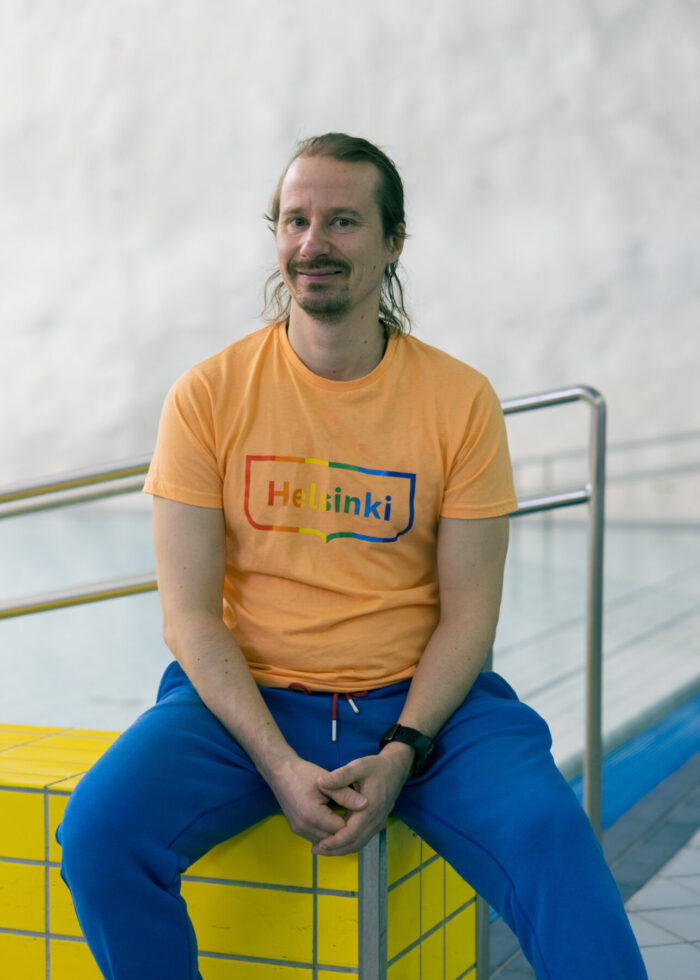
Team manager Ville-Pekka Laukkanen is also a trained swimming instructor. “Though I swim far too little myself,” he admits.
“People don’t really think of this as a shelter,” says Ville-Pekka Laukkanen, the hall’s team manager.
“They see it as a swimming pool that just happens to be underground.”
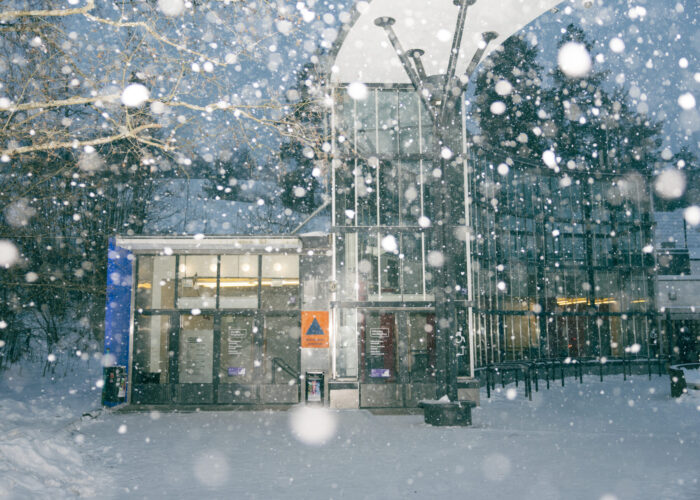
A major renovation of Itäkeskus Swimming Hall is scheduled to begin in 2028.
The same logic applies nearby, in the Myllypuro district, where Formula Center Helsinki operates a 300-metre indoor karting track carved deep into the bedrock.
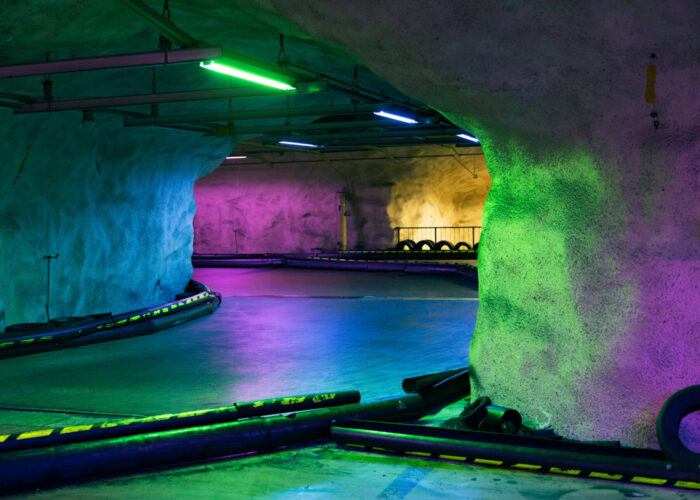
Almost all civil defence shelters can be taken into use immediately; the precondition is that they must be fully operational within 72 hours. Formula Center attracts plenty of workplace groups and first-timers keen to try their hand at karting.
Rain and wind are irrelevant here; conditions remain constant, lap after lap. Underground, sport becomes immune to weather.
When drivers finally emerge back on street level, the sudden daylight is almost blinding.
Punk, metal – and civil defence

Most shelters have been funded either by municipalities or private actors, guided by national legislation and state oversight. In Finland, shelters have been required to be built by law for over 70 years.
While Helsinki’s underground city is unusual, it is neither finished nor static; nor is it meant to be. Like any infrastructure that matters, it remains in a state of constant adaptation.
Pasi Raatikainen saves one final observation for last. It has less to do with emergency planning and more to do with culture.
“Finland has some of the world’s best punk and heavy metal bands because of our civil defence shelters,” he says, grinning.
For decades, bands have rehearsed underground, tucked away in soundproofed spaces carved into the rock. Affordable rehearsal rooms are hard to find elsewhere but below Helsinki, they have long been part of the urban fabric.
“Bands genuinely still rehearse underground,” Raatikainen says. “Where else would young people find spaces like these?”
Beneath Helsinki, it seems, resilience has fostered not only security, but everyday life such as play, movement, music and community.
Text and photos by Emilia Kangasluoma, January 2026
Don’t miss: Helsinki underground
- Many of Helsinki’s underground spaces are easy to explore, even for first-time visitors. Don’t forget to visit these highlights:
- Metro stations such as Kamppi, Central Railway Station and Lauttasaari
- Temppeliaukio Church
- Amos Rex Museum
- Play Cave indoor playground and the sport facilities at Arena Center Hakaniemi
- Itäkeskus Swimming Hall
- The Olympic Stadium has additional facilities underground, including a full length running track
- Formula Center Helsinki
- Underground pedestrian routes and shopping passages in the city centre